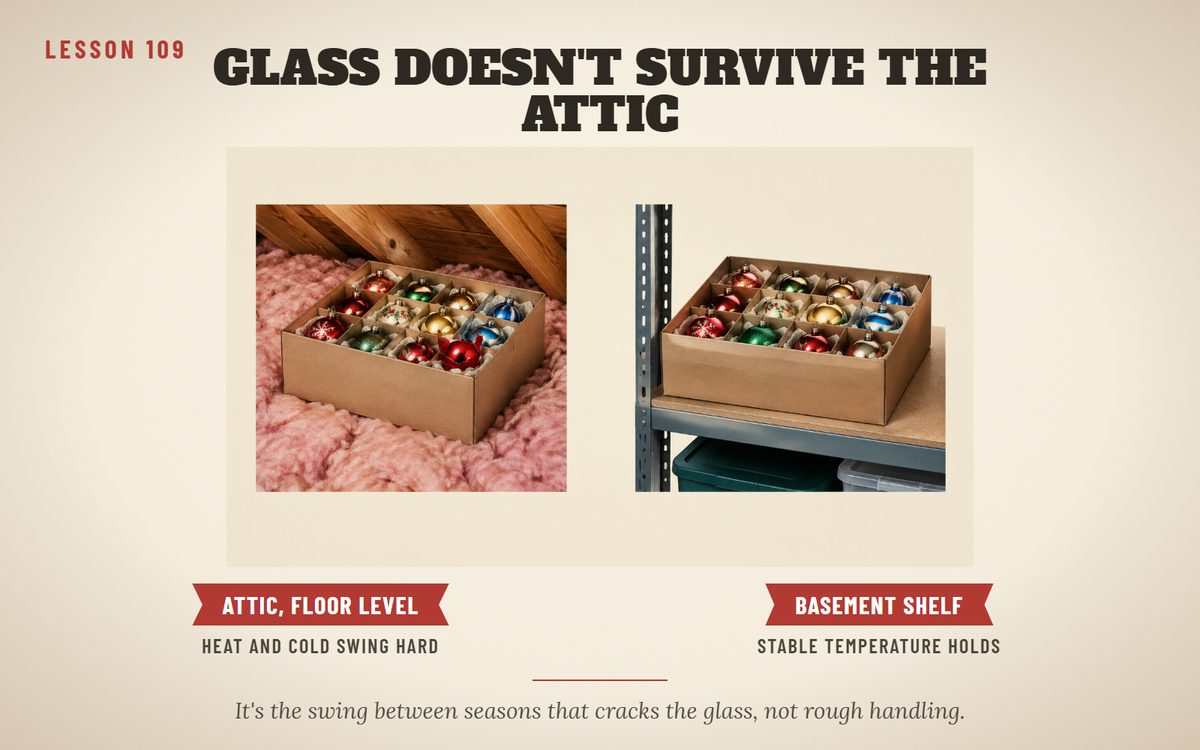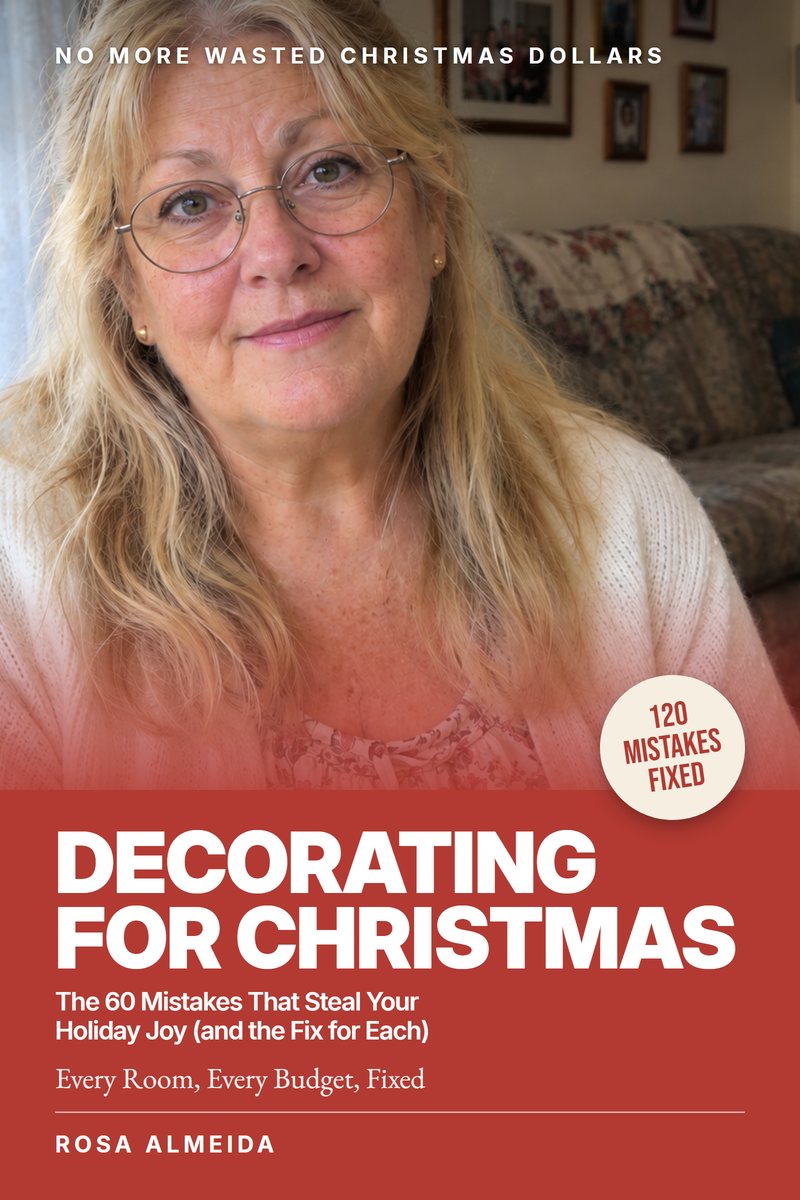
Inside are 116 lessons, organized into seven sections, each built around a single mistake: starting the tree too early, mismatching ribbon to the wall, leaving tree-stand bolts loose after they settle, or buying five cheap nutcrackers instead of one good one. Every lesson gives the exact steps, the common way people get it wrong, and the fix — plus a reference section of 311 exact numbers, so you're never guessing at inches or minutes. It doesn't need a big budget, a workshop, or forty years of trial and error. That part's already done.
By buying you agree to the Terms of Sale and Refund Policy.
0 people went to checkout in the last 24 hours
PDF · 377 pages · 120 illustrated lessons · read on phone, tablet or computer, or print it
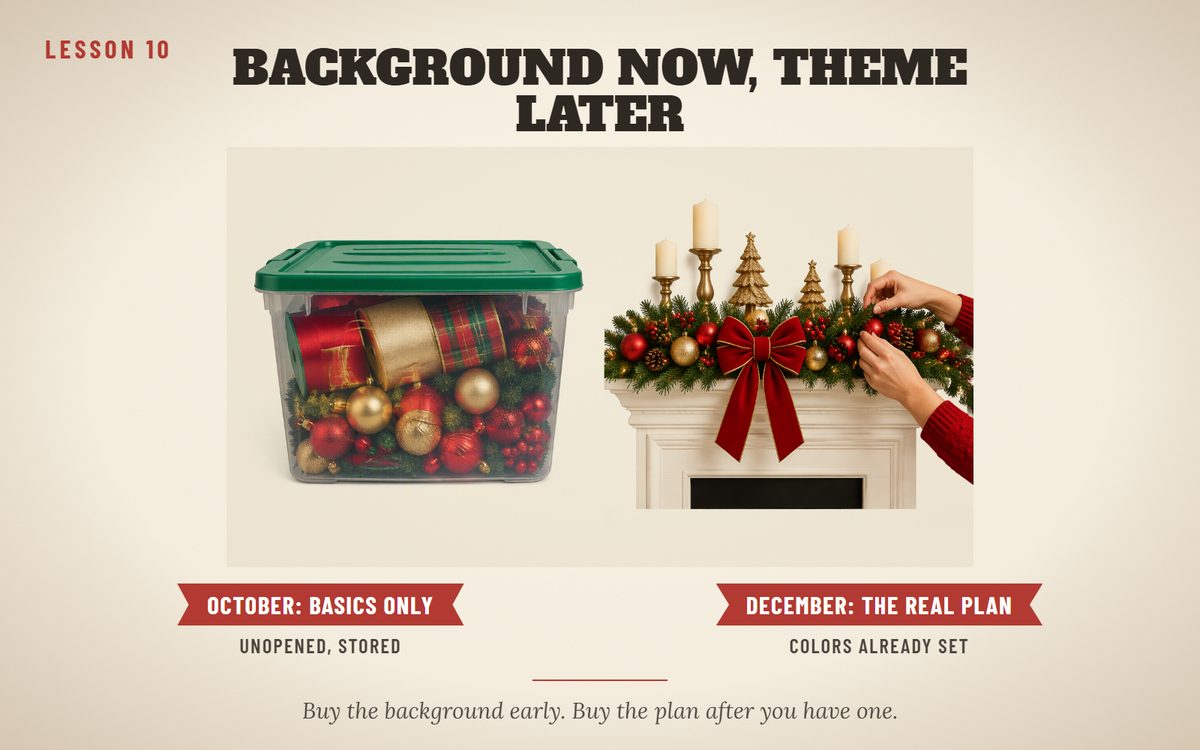
This is the book for the moment the tree already looks wrong and you don't know why, or the ribbon that was perfect in the store and off the second you got it home. It doesn't start with a mood board — it starts with the mistake already in front of you, names it, and tells you what to do next.
The back of the book has an index of 360 problems, sorted by what you're seeing — 'tree looks thin,' 'ribbon fights the wall,' 'lights went dark on one end' — each one pointing straight to the lesson that fixes it.
A reference section holds 311 exact figures pulled from the lessons — base widths, bolt patterns, light counts per foot — so 'about this much' is never the answer you're left with.
Each of the 116 lessons ends with a short section on where the rule stops applying — a studio apartment, a rental, a child's play nutcracker — instead of pretending one rule fits every home.
Every lesson came out of the same small Fall River apartment, decorated the same way for forty years, not a showroom or a photo shoot.
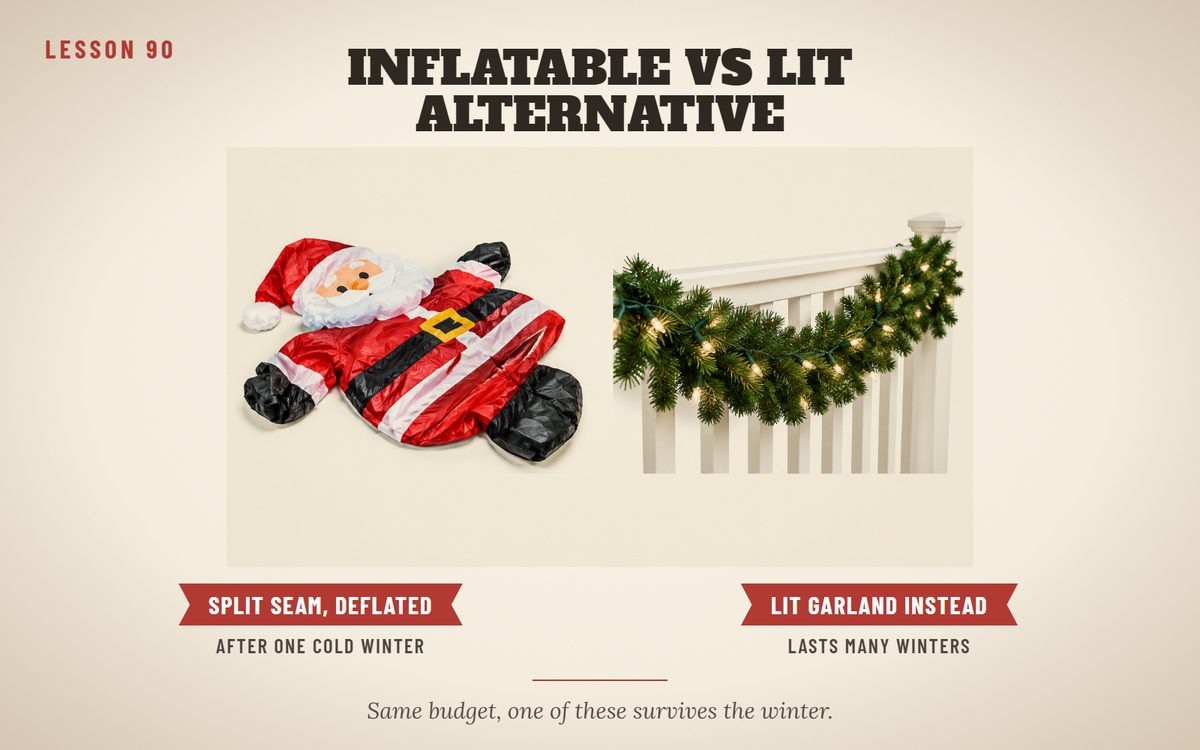
A cheap $8 strand of lights that dims and dies by year two, replaced five times over eight years, comes to about $40 — plus the Christmas Eve where half the strand went dark. A sturdier $25 strand, checked and stored properly each January, can run most of those eight seasons on a single purchase. The lesson isn't 'spend more everywhere' — it's knowing which handful of items are worth the upgrade, covered in Lesson 96 and the 'What's Worth Buying' section.
These are typical U.S. prices for holiday lighting; yours will vary by store, brand, and region.
Seven sections, 116 lessons, one apartment's worth of Decembers — starting with when to begin and ending with how to pack it all away so next year is easier than this one.
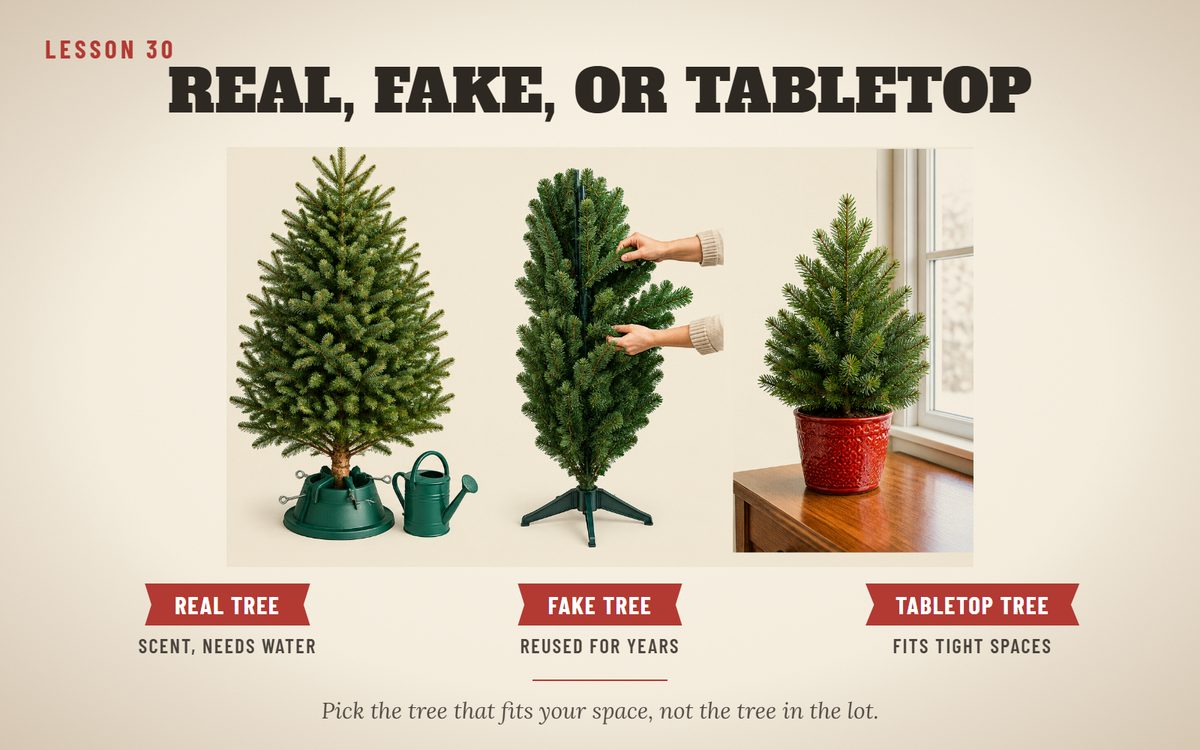
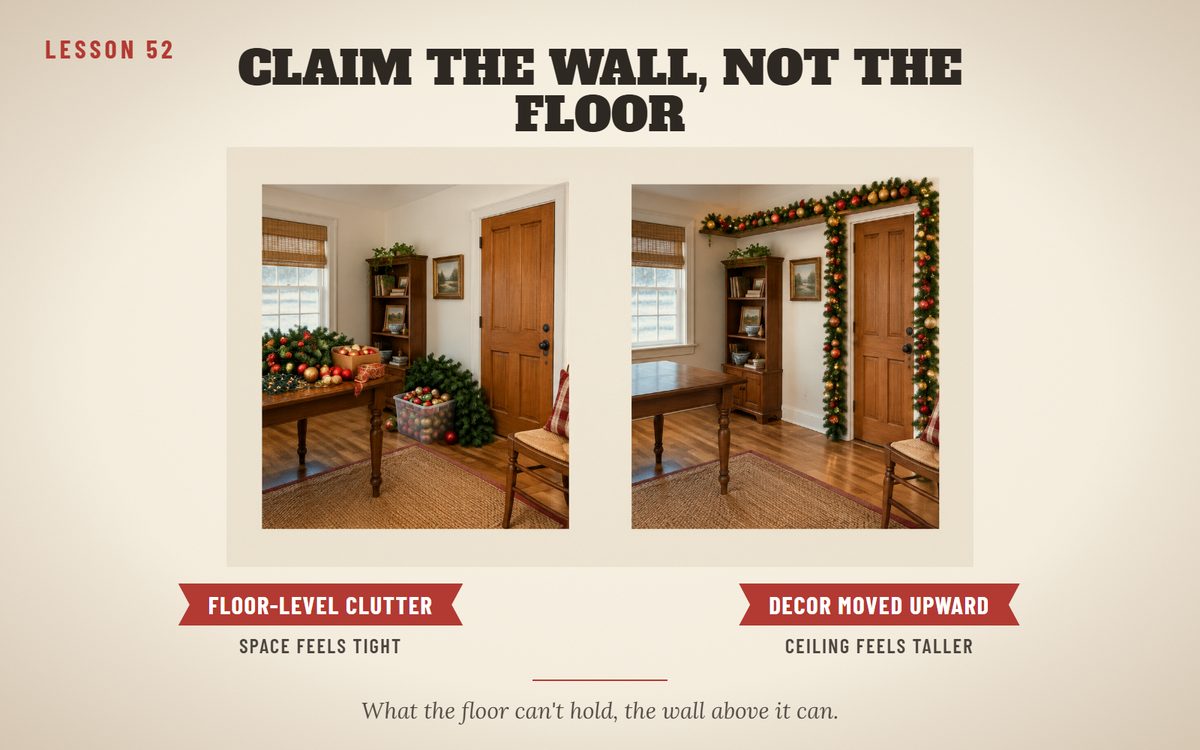
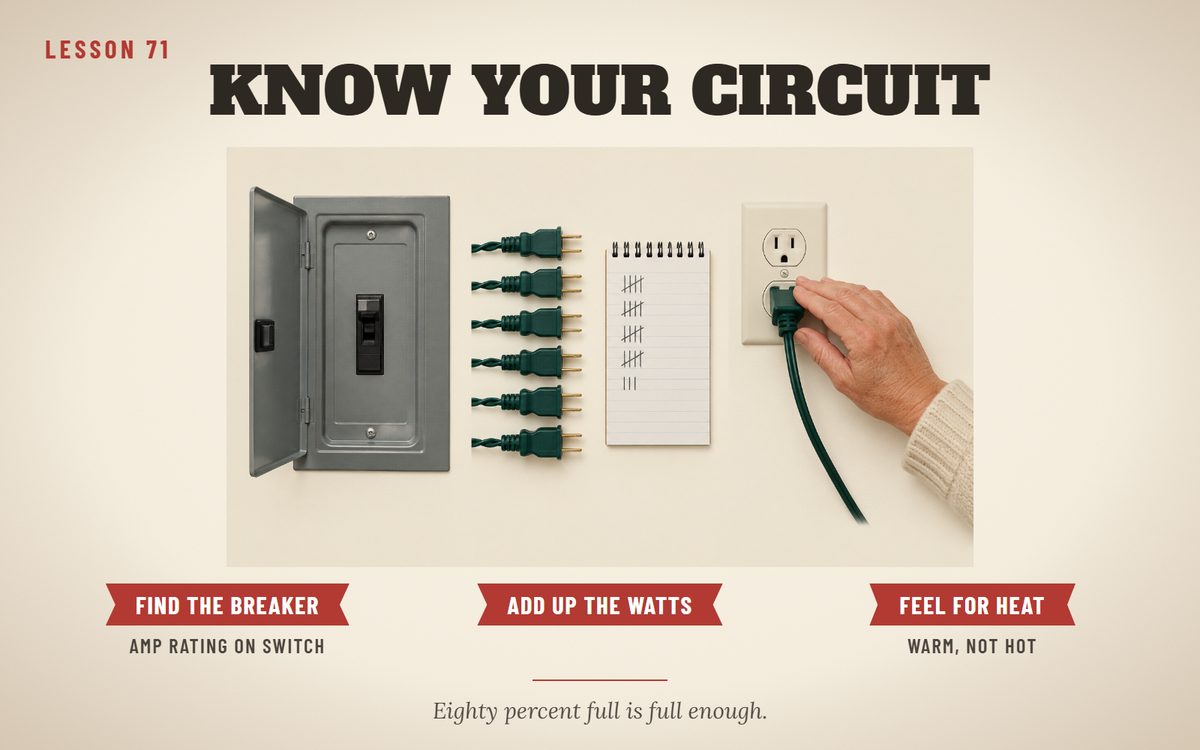
Each of the 116 lessons includes its own drawing of the exact thing described — the star-pattern bolts, the loop spacing on a garland, the egg carton holding an ornament — so there's never a guess about what the words mean.


Click any page to read it up close — exactly what opens on your phone after you pay.
← swipe for more pages →
"Write it down before I forget which year I learned it."
My mother used to say it every December in our kitchen in Fall River: a beautiful holiday home isn't about spending more, it's about spending smart. I heard it so many times I stopped noticing it was advice and started treating it like weather. Then I raised four children in that same triple-decker, and every one of those Decembers taught me something new — which ribbon fought the wallpaper, which tree stand actually held, which nutcracker lasted and which fell apart by February.
For forty years none of it was written down. It just lived in my hands and in a shoebox of receipts on the top shelf of the closet. My grandchildren started asking the same questions I once asked my mother, and I realized I was about to lose track of forty years the same way a person loses track of anything kept only in their head. So I sat at the same kitchen table and wrote down every mistake I ever made, and what fixed it, one by one, until there were a hundred and sixteen.
— Rosa

Rosa Almeida grew up in a Portuguese immigrant household in Fall River, Massachusetts, where every window had a strand of lights and every table had a story. She raised four children and hosted the holidays in the same small triple-decker apartment for forty years, learning to stretch every dollar while still making the house glow.
Now retired, she spends her days finding pretty, affordable ways to dress up a home for the season, and she wants other grandmothers on a fixed income to feel just as proud opening their door. Her secret was never about spending more. It was about spending smart.
“Well hello, meu amor — come on in, let's get you settled with a cup of coffee before we start.”
One digital book — all 116 lessons, the drawings, the index of problems, and the reference section. Nothing else to buy.
The download page opens right on your screen the moment payment goes through, and the PDF links there work right away.
Yes. It's a regular PDF — print the whole thing, or just the lesson you need that week.
No. It's a PDF you read on your computer, tablet, or phone, or print at home yourself. Nothing is mailed, and there's no account to set up.
If you can open an email and click a link, you can do this. The download page is one simple screen, and the lessons read like a person talking to you, not a manual.
Keep the receipt email Stripe sends automatically at checkout — it has your download link, and you can get back to your file through it anytime.
No. One payment of $24, and the book is yours to keep for good.
Yes — it's built around careful habits: checking ladders, testing lights before they go up, keeping walkways clear. Nothing in it asks you to take a risk to save a dollar.
You have 14 days to ask for your money back, no explanation needed, and you keep the book either way.
By card, Apple Pay, or Google Pay, through Stripe's checkout. It takes about a minute.
The boxes come down whenever you're ready — this book will be waiting on the table for you, not the other way around.
By buying you agree to the Terms of Sale and Refund Policy.
0 people went to checkout in the last 24 hours